Wednesday, December 7, 2011

The Consequences of Taking Drugs Abroad

Many believe the Laws of their Home Country apply

When going on a fun holiday, it can be tempting to pack drugs for your stay. 

Many people are found in possession of drugs abroad each year and arrested, yet the real danger lies with the fact that many of these travelers don’t know about the possible punishments of being caught in possession of drugs in a country other than their own.  

Many people wrongly believe that the laws and punishments of their home country apply overseas; this is simply not the case – the law of whichever country you are caught in possession of drugs applies, regardless of your native country's laws.

Possible Penalties

The severity of the penalty depends on the law of the country you are found in possession of drugs in. Even worse, when people are naive enough to bring the drugs along with them and end up getting caught importing  drugs into a foreign country. Some countries take drug abuse and drug importation very seriously, inflicting punishments as severe as the death penalty. Countries outside the EU aren't as tolerant of drug abuse, often viewing substance abuse as a serious offence.

If you fall ill or sustain an injury whilst under the influence of drugs you may be refused medical treatment, if you don’t have sufficient funds, as your health insurance may not cover such medical expenses. Your airline may also ban you from a return flight if found in possession of drugs.

There’s a likely chance of being refused future entry to the country you were found in possession of drugs in. You may also have problems applying for a visa in the future should you require one, as you will have a criminal record.

Involving Your Country's Embassy

The embassy of the country you are a citizen of will be informed if you’re found in possession of drugs regardless of the country you are arrested in. You will then most likely have a criminal record in your home country too, if found guilty. This could seriously jeopardise your future of getting a good job – all because you were found carrying illegal substances.

Although your embassy will be aware of your situation, they won’t be able to help you in the following ways:

· Provide you with drug offense attorneys or legal advice
· Request that you’re released from prison
· Request favourable cell conditions

What’s considered to be “Legal”

Different countries’ laws differ in terms of what drugs are considered to be illegal. In some instances, prescription medicines and alcohol are considered to be illegal, you can be considered to be breaking the country’s law if you are in possession of alcohol or certain prescription drugs. If you have to take medication abroad with you, always check that it isn’t considered to be an illegal substance in the country you’re visiting.

Taking illegal substances abroad can land you in horrific situations, often in a vile prison cell with inmates who have little ability to speak English. Life inside a prison cell can be pretty grim – so before packing some drugs with visions of having a good time, consider how much fun there really is to be had if caught in possession of drugs abroad.

If you are a citizen of the UK, you may want to consult with drug offences solicitors before you risk carrying, transporting or using drugs in a foreign country. 

If you or someone you love does end up getting arrested overseas, contact foreignprisoners.com.

Written By: Steph Staszko

Steph Staszko writes for Just Motor Law, who are motoring offence solicitors specializing in drinking while driving.


Families Behind Bars
What would it be like if you got a phone call to say your child has been arrested for smuggling drugs into an Asian country and they are now on death row? Family Behind Bars is about the real life stories of several families from the United Kingdom, Australia, Canada and United States who bear horrendous burdens having loved ones detained in foreign prisons, their experiences and how they have coped during these times. Kay writes from her own experience of being imprisoned in Laos under false charges and includes her own story in this collection.
Order Families Behind Bars directly from Amazon, HERE


Please help circulate this article... maybe even help someone get or stay clean! 
Please click the  f  Like and +1 bellow!

Monday, November 28, 2011

Hope for those Suffering from Cocaine Addiction found in the True Story of Johnny Delirious

Today there are more deaths from drugs than from traffic accidents! 

There is nothing more painful than to see a family member or loved one start down the path of drug abuse and addiction, especially cocaine. The result is often death from overdose, a disease like hepatitis or AIDS, or ending up on the wrong end of a firearm. 

Many of us know the problem, but can we understand, use and apply the solutions? Only those who have been on both sides of life and death of cocaine addiction and disease really understands what it takes for prevention, not to mention complete recovery. This is my story. Many people say that I'm a dead man walking.

In fact, I stopped going to my high school and college reunions years ago because too many of my old friends and classmates had that "deer in the headlights" look when they saw me walk in! People would say things like, "I thought you were kidnapped in Guatemala," or "The last I heard you were on a sailboat that did not make it the Canaries." 

In short, the thought that my family and friends, I would never stop using cocaine or survive life-threatening hepatitis C. But in 1991, when I operated a lab in Dallas, a family intervention ended with me in a hospital for my last treatment of cocaine addiction - which may have saved my life, as I have been free of all mood-altering substances since then. At the time I was dying of hepatitis A, B and C as well as cirrhosis of the liver. Doctors had given me eight months to live - if I had the chance - and they wondered why I was still alive at the time. They said a liver transplant was my only hope for survival, but I opted out of the transplant and treatment protocol. The doctors further diagnosed me as "delirious." Delirious and near death, I found my own way of recovering from hepatitis. Although over the past 20 years my sobriety had never lasted. Everyone thought that I would relapse and start doing cocaine again. You see, this was not my first intervention. There were many others. Except for my brother, my family had abandoned all hope several years ago. Everyone always said I did not have a prayer of staying clean of cocaine or surviving hepatitis. BUT, I am now clean and sober since 1991 ... and since 1994 I have no viral hepatitis A, B or C without antibodies or markers! Today I am a man of 58 years of age at the peak of health, according to experts, "I have the liver of a 20 year old."

My father was a Tulane graduate with a medical clinic that was very familiar to me growing up. As a kid, I loved going to the lab and using the microscope where the lab tech would enjoy showing me the tests he was doing, how it all worked and what disease looked like in blood and urine under the microscope and the centrifuge, My mother would drop me off at the lab from time-to-time when she could not watch me. To her, I was okay and it was better than a babysitter. To me, it was an adventure!

I continued the work of analysis as a professional, then as chairman of the laboratory for more than 8 years, even becoming a thought leader throughout the nutritional supplement industry for more than 24 years. Collecting in-depth knowledge of nutrition, addictions, and the improvement of the human body, together with my natural recovery from hepatitis A, B and C, and cocaine addiction, I have come to focus in particular on the development of liver health and well prevention solutions. My goal is to help the world achieve a healthy liver, and all for free would be a terrible trap of addiction to cocaine. Many programs now offer health and social work for young people, helping them get the right mindset early on in order to avoid dependency and disease. Prevention is the key! Still, unfortunately many do not consider a healthy liver an integral part of the restoration of self-sufficiency for our young people to prevent illness and addiction.

One of the things we agree on is that depression and low self-esteem are the precursors of youth turning to drugs as an escape, as well as a way to cope. Peer pressure and emotions promote the desire to consume psychoactive substances regularly. I know for a fact that good liver health will to correct chemical imbalance in the blood to counteract depression and low self-esteem at an early age. The fast food generation x, y and z are overweight and not exercising enough and many live their lives in a virtual world of computer games, movies and television. If there were a way of making liver health fun, children today would have a good chance of being drug free in our world. I have a plan that will encourage young people to make wise choices in food and activities in which the liver is imposed to maintain the correct chemical balance in the blood to counteract depression and low self esteem.

The result is a strong-willed and determined the goals of young people to become self-sufficient, and the utility of intentional life. This is my vision that the shapes of universities and skills, because children just want it. 

Johnny Delirious today
My recovery from cocaine and hepatitis work! Why? I have found a better way to see life without it. My path may be a method of prevention of drug abuse and disease in our society. From my point of view, there are alternatives that can be easily implemented. With my professional background, combined with two unique recoveries, I have insight to a unique new approaches to prevention programs. My real life story of drug addiction and hepatitis can be more convincing than the virtual world, children want to live, especially if they have a chance to hear my story. My vision is to help any organization that helps our young people, because the young people of today are the leaders of tomorrow.


My real life story of drug addiction and hepatitis can be more convincing than the virtual world kids choose to live in today, especially if they have a chance to hear my story. My vision is to help any organization that helps our youth of today, become the leaders of tomorrow

Written By: Johnny Delirious

About the Author: Johnny Delirious has a master's degree in natural health with an emphasis on how to recover from Clayton College of Natural Health, Birmingham, AL and is an expert in alternative medicine in multiple networks. He lives in Texas and enjoy a fruitful and healthy life. Read more at JohnnyDelirious.com and cokefreeamerica.com.


This article has been edited from "New Hope with Cocaine Addiction" for Addicts NOT Anonymous by Tom Retterbush

Please help circulate this article... maybe even help someone get or stay clean! 
Please click the  f  Like and +1 bellow!

Friday, November 18, 2011

Loving to Get High

Loving to Get High is what Addiction is all about. 

"Loving to Get High" is the reason behind continued use, despite consequences. It hooks an addict at a deep and visceral level, going beyond common sense and logic. It is behind all of the deception and the ruse of the secret life of an addict. It is also the most unrecognized aspect of the path to addiction. It is ignored by social workers, addiction counselors, educators and Doctors. Parents have no clue that this secret love relationship exists.

“Loving to Get High” gives reason for the addict to keep this duplicitous life going. Secretly the addict knows that if someone figures out the power and strength of this love relationship, it will come to an end.

Therefore we have the biggest cat and mouse game imaginable.

What I’m talking about, I have learned from working with “adolescents in denial”, but more importantly I learned all about this from my son who got high for three years without my wife or me figuring it out. This either made us naïve or him a very good liar, or maybe a little of both.

Bottom line, our son loved to get high and did everything possible to keep it a secret; including being sweet, cooperative and considerate. He continued to go to church with us and attend youth group. But he had a secret life; he loved to get high. His drug of choice was ‘acid’; he smoked a lot of ‘pot’ and the bottom fell out of his lie and life when he got high on ‘Angel Dust’.

When the assessment counselor told us that our son was an inch away from going into treatment we were shocked. How could he have let this go so far? As a parent it was disconcerting that our son was in this much trouble and we had not done something about it.

As a professional I knew better, not to fall for the excuses like; he’s depressed or he’s being bullied in school, he has reasons to act this way. But as a parent it was different, it was my son, not a client or someone else’s kid.

As a professional it actually brought about a break through. Now I figured out how deep seated and understandable “parent denial” was. There is a reason it’s hard to get to the bottom of this issue. Kids and parents are both victims to this secret ‘loving to get high’ relationship.

Maybe this experience could benefit parents everywhere. If I could help them figure out ahead of time that they were being lied to by a son/daughter who had a lot to lose, by you figuring out what was going on, it would all be worth it.

When I looked back at my career I realized that in the back of my mind, I actually knew what to look for, unfortunately this never came to mind. Thirty-two years ago I worked at a treatment center that used, what I thought, was a unique definition to addiction. It goes like this;

“A primary, love-trust relationship with a mood-altering-chemical, (MAC)
that systematically changes a persons, attitude, values, goals and relationships.”

I’ve occasionally referred to this definition, but have never heard it used by any other program or counselor. I may have assumed that it was a good definition for its time, but not relevant to the parenting, prevention or treatment of adolescent addiction.

It was not until the “the Loving to Get High Syndrome” hit home, that this idea of a “primary love/trust relationship with a MAC” started making sense. I guess this treatment program was on to something.

I remember telling parents that since this relationship was ‘primary’ that everything and everyone in their kid’s life had become secondary; including school, values, goals and them as parents. We also talked about infatuation, which is a form of head over heels love that affects our thinking, judgment, priorities, moods, etc.

All of these great teaching tools disappeared when it came to raising my own son. Maybe this happened for a reason. What I was considering a nice idea about addiction and a helpful teaching tool for parents, actually ends up to be much more significant. It’s not just a good idea; it’s the essence of addiction.

The “Loving to Get High Syndrome” is beneath and before any addiction.

• The “automobile of addiction” goes nowhere without the fuel of “loving to get high”.
• The “D.N.A. of addiction” is found in “loving to get high”.
• The “conception of addiction” is the “realization that ‘I love the way this makes me feel’.
• The “disease of addiction” is in the “biology of loving to get high.”

There is so much significance in “Loving to get high”, that I would dare say that addiction would not exist without it. And it is the part of the problem that we totally ignore. It is also a part of the solution that we are not tapping into.

If you’re a parent a big part of the solution is figuring out what is going on and doing something about it. First thing is for you to realize that there is a reason for an addict to lie, even if it is your sweet and innocent son or daughter. That’s what this is all about.

The second thing is for you to know very specifically what you are looking for. Here is a list of signs and symptoms that will help you identify what this “Loving to Get High Syndrome” looks like.

• Lying, in order to not get busted.
• Minimizing problems that are connected to getting high and drunk.
• Blaming others for things that I did.
• Drama, crying, hysterics; strong put-on emotions, to make you too worried to act.
• Guilt producing accusations towards you.
• Telling you things like; “You don’t trust me!” “Why are you so mean to me?”
• Comparing you to other parents, “Joe’s parents let him stay out all night”.
• Sneaking around and suspicious behavior.
• Elaborate excuses for this, that and the other thing.
• Intimidating and threatening behavior to get you to back down.
• Good grades. “How could some with straight ‘A’s’ be getting high?”
• Good behavior and compliance, letting you know that “You can trust me”.
• Bad behavior and Defiance, letting you know that “You can’t control me!”
• Erratic behavior and out of control behavior.
• An “I don’t care and what are you going to do about it?” attitude.
• Skipping out of family activities.
• Laziness and procrastination.
• Extra social and new friends.
• Using “Axe” body spray to cover up the smell of pot.

“It’s time to talk!” Your denial of what’s been going on has been connected to not knowing; being confused, feeling insecure about what the deal is. Now with what you are learning it’s time to act.


When my wife and I figured out that our son was using we did three things immediately; had a drug use assessment done by a counselor, started doing random drug tests and the third thing was to go to an educational class for parents in the community.

These 3 steps started a process of getting help; for our son and for us. We went to Alanon Group for parents and our son went to Alcoholics Anonymous and got a sponsor. It wasn’t easy, but it was a pro-active process that created results and addressed the problem.

All I can say is start; begin your own pro-active process and good-luck.

Written By: Timothy Titus M.P.H.

Check out the Timothy Titus website, Teenage Drug Use; Loving to Get High Syndrome at timtitus.com

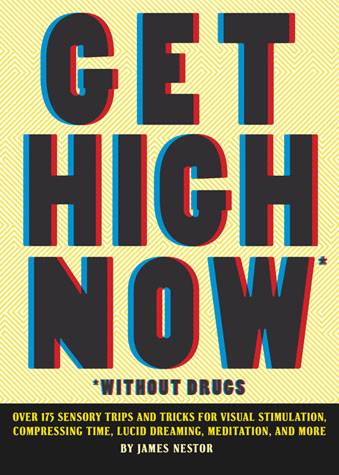
Get High Now (without drugs)
by James Nestor

Get High Now is an illustrated, mind-blowing magic carpet ride of more than 175 ways to alter human perception and consciousness without drugs or alcohol. Culled from science, physiology, spiritual practices, and the audio visual arts, these well-researched concepts such as lucid dreaming, optical and auditory illusions, controlled breathing, meditation, time compression, and physical and mental exercises, explaining the ways in which they affect our minds and bodies and how to do them.
Order directly from Amazon, HERE


Please help circulate this article... maybe even help someone get or stay clean!
Please click the ff  Like and (more importantly) .+1. bellow!

Wednesday, November 2, 2011

Good Life Bad Life

Your life is a reflection of your perceptions.

Unless you've been living under a rock, you know that perception influences everything in your life. If you see the world as good, it is good. If you see it as bad, it is bad. Your life is a reflection of your perceptions. Even though we know attitude is everything, many of us trip ourselves up by focusing more on our perception of bad than our perception of good. And we judge ourselves more harshly than anyone else.

As a numerologist, I see in the charts of my clients all the traits they were born with. I see their strengths and weaknesses, I see the potential they came here with. I see how they are living their lives. I listen to their concerns and see that they have the answers. All they need is a little guidance and a shift in perception to get them back on track.

In addition to personality traits, I see the soul's qualities - the tremendous potential to do great things, the innate power and the heart's desire that will lead them to fulfill an exciting and joyful purpose. I see the qualities that can strengthen them to heal their vulnerability. I see a complete being who has all the tools they need to live an inwardly and outwardly successful life; a person who has the power to be authentic in every way.

I've never seen a numerology chart that tells me a person is powerless or inferior. When I look at a person's chart, I see someone who can influence the world in a positive way just by being who they are; just by following their soul's desire. I see the strengths they possess to overcome their weaknesses. What a person sees as problems I see as a wealth of information.

I see the way a person perceives him or herself. I see that he or she is focusing more on weaknesses than strengths. In working with people, my intention is to help them focus more on their strengths and see their problems as challenges they chose to help them create a happier life.

I've never met a person, however, who perceives him or herself that way. Most of us see ourselves as flawed human beings, and we allow that perception to influence our lives on every level.

What if we are not flawed? What if, in recognizing our so-called weaknesses, we are simply seeing lessons we chose to learn? If we could look at our problems as information, how would it influence our lives? If you could see yourself as a soul with a positive purpose, with the power to master your challenges, how would that change your life?

You can choose to change your perception of yourself. You can choose to see the innate abilities you have. You can choose to love yourself and appreciate who you really are. Deep in your heart you know the answers to all your questions. Once you make the decision to be who you really are, you will attract the right people to help you. You will be attracted to the right information and the right situations to help you unfold your true self. All you need to do is decide.

My book teaches you how to use numerology to learn who you are, what you are doing here, and where you are going. Take a look and sample You Were Born to Succeed: Finding Your Purpose though Numerology. Only you can decide what is appropriate for your growth.

Each of us is on a journey of spiritual growth. Each of us was born to succeed. We can choose to create a life of joy or live a problem-filled existence.  Here are some words of Native American wisdom.

An old Cherokee is teaching his grandson about life. "A fight is going on inside me," he said to the boy. "It is a terrible fight, and it is between two wolves. One is evil - he is anger, envy, sorrow, regret, greed, arrogance, self-pity, guilt, resentment, inferiority, lies, false pride, superiority, and ego. The other is good - he is joy, peace, love, hope, serenity, humility, kindness, benevolence, empathy, generosity, truth, compassion, and faith. This same fight is going on inside you - and inside every other person, too."

The grandson thought about it for a minute and then asked his grandfather, "Which wolf will win?"

The old Cherokee simply replied, "The one you feed."* 

It behooves us to be aware of which one we are feeding.

Live your purpose every day.

Written By: Nancy Fairbrother

Nancy Fairbrother is a psychotherapist and metaphysician who used modalities from psychology and metaphysics in her private counseling practice. When she retired from private practice she wrote You Were Born to Succeed: Finding Your Purpose though Numerology from a desire to share her experience with people all over the world.

"We are moving toward a new paradigm that is unfolding through the discoveries in quantum physics," she says. "We are discovering that science and spirit are two sides of the same coin." You can see more articles on her Numerology - Discover Your Purpose blog.


Please help circulate this article... maybe even help someone succeed!
Please click the ff  Like and (more importantly) .+1. bellow!


Tuesday, September 6, 2011

Are Addicts Ready to Shed their Anonymity and Face Society with their Names?

Is It Time to Take the Anonymous Out of AA, NA and other 12 Step Programs?

In opposition to the traditions of AA, an article in The New York Times by David Colman advocates a non-anonymous 12-step program for alcoholics, addicts, and substance users.

Is It Time to Take the Anonymous Out of A.A.? was the subject of an essay by New York Times columnist, bestselling novelist and biographer, Susan Cheever, in The Fix. 


“A.A.’s principle of anonymity may only be contributing to general confusion and prejudice.” - Susan Cheever

Considering that Cheever has written books about her alcoholism and the alcoholism of her father, the well-known writer, John Cheever, as well as the best-selling, “My Name Is Bill,” biography of the founder of Alcoholics Anonymous, you would think her to be an advocate of anonymity. However, in her essay she expressed her frustrations about trying to practice anonymity while trying to speak bluntly about addiction, writing:

“We are in the midst of a public health crisis when it comes to understanding and treating addiction,” Cheever wrote. “A.A.’s principle of anonymity may only be contributing to general confusion and prejudice.”

Although her message wasn’t exactly greeted with open arms, sparking a flood of mostly critical comments from the site’s readers, she showed her commitment and bravery when she wrote:

"Anonymity has long protected alcoholics from stigma. But cloaking ourselves in strict secrecy seems like an odd strategy in the modern world. Any individual is entitled to maintain his or her anonymity. But as public perception of alcoholism and addiction begins to change, shouldn't A.A. change as well?"

As expected, this fueled an avalanche of angry comments, such as; “Without ANONYMITY, A.A. will not continue to exist and help millions of alcoholics and addicts all over the world!”)

This sentiment was shared by Hilding Ohrstrom, LCPC, CCS, an addiction counselor, who wrote during a LinkedIn discussion of he subject, “…I don't know that a group such as that would get too many members, though. I am reminded though of former clients who did not want anyone to see their cars outside of meetings or counseling centers but didn't mind them being seen at local gin mills,” though I believe there are enough addicts with enough balls out there, who are willing to come clean and stand behind what they have to say with their name.

However, a well certified counselor, Tony Trimble, Ed.S. LMHC, SP, ACC, CFAE, wrote during that same LinkedIn discussion, “I have rarely worked with a client who has expressed great concern about his anonymity in AA groups. Some even believe that making themselves known gives them greater credibility to talk to others about being addicted. That said, I think the obligation still exists for clients to avoid doing anything that would expose others who may take their anonymity seriously.”

Another addiction counselor taking part in that LinkedIn discussion, Patrick Dieter, CDP, CADC II, BHT, said, “I believe that most secrets are harmful, but having said that, it is not my place to "out" other people's confidential stuff. With "rehab" being almost fashionable these days, I suspect the stigma about alcoholism may have shifted somewhat, yet I still run into people every day who don't truly understand the disease and seem to thing that alcoholism is just an excuse for some sort of character flaw. Oh, sorry -- that's the Big Book. It seems that people who do not suffer from the disease are almost incapable of understanding why addicts can't just "snap out of it." They see it as excuse making, and laziness. Sad.”

“Having to deny your own participation in a program that is helping your life doesn’t make sense to me,” said Maer Roshan, the editor of The Fix, a new, modern, in-step Web magazine targeting the recovery world. “You could be focusing light on something that will make it better and more honest and more helpful.”

"AA is not the Cosa Nostra, the KKK, the Skull & Bones Society, or the Illuminati. Indeed, one of Alcoholics Anonymous’ favorite aphorisms is, “You’re only as sick as your secrets.” So why do we continue to deny our association with this life-saving program? Times and attitudes towards addiction have changed radically in the past few years. Isn't it time for A.A. to change with them?" writes Leonard Buschel, a strong, not anonymous AA advocate and supporter in his article, The Never-Ending Argument Against Anonymity in AA, also appearing on The Fix.

"The cloak of anonymity makes it hard for people who are seeking treatment to get the lowdown on rehab programs; it's often hard to determine, for instance, if a program is run by 12-step group members who believe that their way is the only way. Preserving anonymity has also been used as a reason not to conduct research on the effectiveness of 12-step programs — even though research participants in all studies remain anonymous anyway," writes , in her article, The Addiction Files: How Do We Define Recovery?, which appeared on Time's Healthland website.

As you can see, more and more people have been speaking out against the Anonymous Concept associated with AA, NA and other similar 12 Step Programs.

If people didn't need rewards, they wouldn't have invented awards!

Could this outcry against anonymity be associated with people's need for affirmation and acknowledgement associated with success? More and more people, including myself, are wanting to attach their names to their achievements. This doesn't mean we don't ever want to do something for someone else without receiving recognition or reward, but sometimes one needs a pat on the back, if for nothing else but to reassure ourselves that we are on the right track. 

Yes, most people want to put their names on their articles, stories, poems and songs, as it is only natural for people to want credit for what they have created. However, this is a two edged sword, considering this in essence requires people to take responsibility for their actions. And this is something that most drug addicts have avoided their whole drug using career.

By shedding the anonymous, addicts become accountable for everything they say, write or do, which, I believe, is the way it should be. I believe this to be a very important step in addiction recovery.

The Anonymous Factor may have been useful, even crucial at one time, back when addiction was still seen as a humiliating weakness of character. And although today addiction is seen more as for what it is, a very common disease anybody can get, many people in AA or NA will do anything and everything but break their anonymity, still identifying themselves only as a “recovering alcoholic” or "recovering addict". But what if, as Susan Cheever pondered, the movers and shakers of the world who are in AA or NA - the senators and congressmen, ministers, doctors and lawyers and Fortune 500 businessmen—stood up and were counted as members of A.A? It would go a long way toward clearing away the misunderstandings that still surround addiction.

Anonymity may protect, but it also hides, says Cheever. The act of coming out has been critical to ending negative stereotypes and stigma for the gay community. The fact that AA membership is secret with many meetings not open to those who haven't stopped drinking, the group has become increasingly cult-like, with a secret language and rituals. 

I never liked AA and NA's ritualistic, strict, rigid and stubborn program, with no room for compromise or tolerance. Still, everybody is different, and there are many who need the structure that anonymous 12-step programs provide. Just as others need the authority associated with military life, many in AA and NA need someone to take charge over them, making these programs with their sponsors the perfect environment for them.

Because everyone is different, the world needs more alternatives to 12-step groups so that those in recovery can have more choices. This is why I founded Addicts NOT Anonymous.

It is my intention, with Addicts NOT Anonymous, to build a support network based on tolerance, acceptance and understanding around shared experiences, rather than a rigid, inflexible program of rituals, traditions and secrecy. 

If you would like to get involved with Addicts NOT Anonymous, no matter if you would like to help build the planned addictsnotanonymous.org website, help with the projected forum and possible chat-room, by writing articles and or stories, or by helping with the always much needed funding, please contact me at tomretterbush@gmail.com.

I am not sure how it will play out, but I have witnessed that people who have shared experiences with great emotional impact tend to bond over them, and stick together in a natural support network.

What are your views regarding the pros and cons to breaking anonymity? Should AA, NA and the other 12 Step Programs drop their Anonymous? Or should new non-anonymous groups, like Addicts NOT Anonymous form to co-exist with the traditional groups? Let Addicts NOT Anonymous readers know how you feel and what you think with a comment, bellow.

Written By: Tom Retterbush


Please help circulate this article... maybe even help someone succeed!
Please click ff  Like and (more importantly) .+1. bellow!

Sunday, August 14, 2011

Is Marijuana really the Wonder-Drug that could Help Millions or actually a Menace of Society?

Many people say marijuana is the most beneficial of all the substances, while others claim it is the most harmful. 

Regardless that the Journal of Health and Social Behavior found that Marijuana is not a “gateway” drug, that the Global Commission on Drug Policy report describes America’s “war on drugs” a total failure, and all the scientific research supporting the medical benefits of marijuana, America continues its witch hunt on the magic herb.

In fact, the US DEA has the audacity to decree that marijuana has no accepted medical use. This decision by the DEA comes almost nine years after medical marijuana supporters asked the government to reclassify cannabis to take into account a growing body of research that shows its effectiveness in treating certain diseases, is clearly a self-serving act to keep their funds coming and their agents busy.

Marijuana has been used for medicinal purposes for over 4,000 years. Manuscripts from ancient India confirm that marijuana's psychoactive properties were used by doctors for treating a variety of ailments and illnesses, including gastrointestinal disorders, headaches, insomnia and as a pain reliever during childbirth.

The American Medical Association urges the Federal Government to support medical marijuana, the Institute of Medicine and New England Journal of Medicine endorse medical marijuana, while Newt Gingrich even wrote a letter (published in the Journal of American Merdicine) supporting medical marijuana, and as these are but a small sample of the overwhelming support for medical marijuana, the US DEA still declares that marijuana has no accepted medical use. Does this smell right to you? Oh, it gets better.

Recently, Marijuana has even been approved by California and many other states to treat a range of illnesses, because of the continued success of treatment, studies and trials including marijuana. Many state's government legislation has made both marijuana and Marinol more available to patients. Though still illegal on a federal level, many patients are now finally able to apply for personal possession from their sate of residency.

Poll results concerning the legalization of marijuana
Popular opinion has also swung behind marijuana. Americans  overwhelmingly support it in national polls. Gallup's latest poll finds 44% of Americans in favor of legalization and 54% opposed. US public support for legalizing pot was fixed at about 25% until 2000 when acceptance jumped to 31%.

However, because of the prohibition of marijuana, mostly due to the pharmaceutical and alcohol industries, as well as anti-drug activists and religious crusaders, the use of both marijuana and Marinol as a medicine remains restricted. 

Dr. Igor Grant, a neuropsychiatrist who is the director of the Center for Medicinal Cannabis Research at UC San Diego, said state-supported clinical trials show that marijuana helps with neuropathic pain and muscle spasticity. However, still the federal government's position discourages scientists from pursuing research needed to test the drug's medical effectiveness, he said. "We're trapped in kind of a vicious cycle here. It's always a danger if the government acts on certain kinds of persuasions or beliefs rather than evidence," Dr. Grant concluded.

The studies showing treatment success of marijuana are overwhelming. Just check out the success ratios recorded from studies by Daily Strength in the chart bellow! How can the US government ignore these stats?

Treatment Success for Marijuana
  
CONDITIONMEMBERSSUCCESS
Chronic Pain 70386%
Depression5696%
Bipolar Disorder4595%
Anxiety3394%
Fibromyalgia29100%
Multiple Sclerosi...23100%

Overall, 90%, that is 1,140 DailyStrength.org Members, found Marijuana helpful. Read the reviews, HERE.

Updated 8/31/11


Studies to Discover the Full Potential of Marijuana's Benefits

Its time we put aside old bias and prejudices and study marijuana with all our resources, so we can harness the full potential of its benefits! 

Already scientists, researchers and doctors have discovered a wide range of benefits unequaled by any other natural or chemical medication, ever. Period.

No other medication or herb offers relief from symptoms like these:
  • Relief of muscle spasms
  • Relief of chronic pain
  • Reduction in interlobular pressure inside the eye
  • Suppression of nausea
  • Weight loss - increase and restore metabolism

No other medication or herb offers treatment from a wide variety of diseases like these:
  • AIDS - Marijuana can reduce the nausea, loss of appetite, vomiting from the condition itself and the medications as well.
  • Glaucoma - Marijuana relieves the internal eye pressure of glaucoma, and therefore relieving the pain and slowing or even stopping the condition.
  • Cancer- Many side effects of the medication to stop cancer can be relieve with Marijuana, some studies suggest that Marijuana tends to slow down the progress of some types of cancer.
  • Multiple Sclerosis - Muscle pain, spasticity, tremors and unsteadiness are some of the effects caused by the disease that can be relieved by Marijuana.
  • Epilepsy - in some patients, epileptic seizures can be prevented with Marijuana use.
  • Chronic pain - Marijuana helps to alleviate the pain caused from many types of injuries and disorders.
    Anxiety, Depression or Obsession - Even though mild anxiety is a common side effect in some users, cannabis can elevate your mood and expand the mind

Medical Marijuana can Treat a Variety of Serious Diseases

Cannabis also acts as an antispasmodic and anticonvulsant and is indicated for neurological conditions such as epilepsy especially complex partial seizures, multiple sclerosis, and spasms. As an analgesic and an immunomodulator it is indicated for conditions such as migraine, arthritis, spinal and skeletal disorders.

As a broncho-dilator it is beneficial for asthma. It also reduces the intraocular pressure and is indicated for glaucoma.

It is useful in treating premenstrual syndrome, hypertension, insomnia, constipation and alcohol hangovers.

Marinol, is now becoming widely available through prescription. It comes in the form of a pill and is also being studied by researchers for suitability via other delivery methods, such as an inhaler or patch. The active ingredient of Marinol is synthetic THC, which has been found to relieve the nausea and vomiting associated with chemotherapy for cancer patients and to assist with loss of appetite with AIDS patients.

Medical Marijuana can Help with Physical Addictions

There have been testimonies from opiate users that report an easing of addiction cravings. Some cannabinoids in cannabis are believed to have similar effects as ibogaine, a medication used to treat heroin addiction.

Medical Marijuana can Benefit Psychologically and Spiritually.

Recent studies have shown marijuana to be effective in treating mood disorders and mental health issues such as depression, post traumatic stress disorder, clinical depression, obsessive-compulsive disorder, panic disorder, and bipolar disorder.Marijuana should be offered as an alternative therapy, used in conjunction with psychiatric therapy.

Marijuana can be used to enhance personal Spirituality. The herb tends to reveal your true self. It uncovers inner confusion and reveals your true direction - if you let it. Marijuana offers an effect that is both energizing and relaxing at the same time. This balanced effect will help some to think more clearly and more efficiently afterwards.

Joan Bello, author of The Benefits of Marijuana, wrote, "with the expansiveness that occurs with marijuana, the subject may begin to notice infinite possibilities to raise the quality of his/her life that would otherwise have remained hidden from normal, defensive consciousness. And feelings of health and happiness naturally lead to hope, which of itself can be curative." 

Joan Bello also writes,"Marijuana will not tolerate repression. Tranquillizers and depressants relax the body and release tension, but the state of mind associated with these drugs is 'unconsciousness' whereby we escape rather than resolve our dilemmas. Alcoholism is an extreme need of both the body and personality sometimes to release the nervousness that has accumulated and continues to build up to an unbearable degree. It serves the same function for the collective personality for the society, as well A culture in which alcohol and tranquillizers are the prevalent form of release prefers not to witness internal confusion and actually choose to act without conscious participation, maintaining a semi-numb condition."

Apparently, considering the US DEA decrees that marijuana has no accepted medical use, they want you to use their drugs which are far worse! Have you ever read the side effects of some of the prescription drugs used to treat the diseases and ailments I outlined above, that could be treated just as well if not better, with marijuana?

And as I mentioned earlier, the claim that marijuana is the Gateway Drug that could take a teenager down the road to destruction has been totally discredited. The Journal of Health and Social Behavior, found that Marijuana is not a “gateway” drug, as was supposed according to long-held beliefs that marijuana leads to the much more dangerous drugs such as meth, ecstasy, cocaine and heroin (read my article, New Research Suggests Marijuana is NOT Gateway Drug as Believed, here on the Addicts Not Anonymous blog). So as you can see, another futile attempt to demonize marijuana bites the dust.


Considerations

I believe I have made my case, that marijuana is not the demon it has been made out to be by various governments, religious crusaders and self-righteous fanatics. I believe I have demonstrated that marijuana is very beneficial preventing, alleviating and/or curing various aliments, sicknesses and diseases. And still I believe, marijuana is not for everyone.

There are those who misuse, overuse or abuse anything you put in front of them. They overeat, over-drink and gamble until they're broke. They over-everything. Marijuana is not for them.

Like everything, marijuana requires moderation. If one overuses marijuana it will lead to a psychological and emotional addiction. Even moderate use can lead to psychological dependence in people with addictive personalities.

As with any drug, I strongly recommend a person research their family history for problems with alcoholism and drug addiction before trying marijuana. You may also want to consider if you have problems with self control; ask yourself:

  • Do you have problems with tobacco and/or alcohol?
  • Do you have problems with overeating and/or eating when you're not hungry?
  • Do you have problems saying no to food, gambling, pornography or anything destructive?
  • Have you ever let recreational activities become a financial burden?

If you said yes to any of the above question, you probably have an addictive personality and should seriously reconsider your decision to try marijuana, or any drug for that matter, as you could be in serious danger of developing some degree of psychological dependence.

I know this sounds crazy, as most first time marijuana users do so spontaneously, in the spur of the moment, but maybe you should make up your mind about wanting to try marijuana deliberately and consciously, beforehand. As in right now! You may also want to have a talk with your children about this issue, making them aware of any possible family history of addiction.

If you don't have any problems with any of the issues I discussed above, I see no reason whatsoever for you to NOT try marijuana. Heck, it may even help you have a spiritual revelation and change your life for the better.

Conclusion

When will lawmakers stop listening to religious crusaders and self-righteous fanatics and do what is right, in legalizing a natural herb that can potentially cure, or at least help millions from suffering needlessly?

When will lawmaker stop listening to those who profit from keeping marijuana illegal and do what is right, in legalizing a natural herb that has been used in societies longer than this society has even existed?

Do you believe marijuana is a wonder-drug or a menace?  Do you believe that marijuana is a legitimate medicine? Do you believe it should be legalized? Please leave your opinions in the form of a comment bellow. Addicts Not Anonymous readers and I would really like to know what you think about America's (and the world's) marijuana policies.

Written By: Tom Retterbush

For Further Reading

You may also want to check out my articles, New Research Suggests Marijuana is NOT Gateway Drug as Believed, Why Parents Should Support the Legalization of Marijuana and Marijuana and Hallucinogens as an Effective Treatment for Depression here on the Addicts Not Anonymous and The Great American Marijuana Conspiracy: Will the War on Drugs Ever End?, which appeared on my Conspiracy Watch blog, Friday, August 26, 2011.

This article is actually an updated, more complete version of my earlier article, Is Marijuana the Wonder Drug that could Help Millions of People?, which appeared on Health-be.com, Sunday, May 8, 2011.


Download How to Grow Medical Marijuana as a PDF ebook instantaneously, now. No sign-up, no log-in, no obligations, no kidding! This book is easy to read and factual. It takes you through all the steps to grow the "devil's Weed" (The man who wrote the introduction to this book Mr.Peter McWilliams was in reality killed by the govenment for his efforts to publlish this book -- investigate this and you will find it correct). If you need this medicine to save your life read this book. The book also reveals the stupidity of America's Drug War, a fanatical war against our own children and citizens.


A holistic understanding of the physical, psychological and spiritual benefits of marijuana which bridges the gap between ancient wisdom and modern science.

Bello has incorporated everything of significance. She presents it all with balance, lucidity and a sort of calm spirituality. -- High Times, 2000


               Please help circulate this article... please click ff  Like and .+1. bellow!

Monday, August 1, 2011

Could Benefits of Drinking really Outweigh Harm?

Research by the  CDC and the National Institute on Alcohol Abuse and Alcoholism reveals that the benefits of moderate drinking outweigh harms from abusive drinking.

The US Centers for Disease Control and Prevention (CDC) calculated that in 2001, abusive drinking lead to about 75,766 deaths from all causes, a number that continues to decline. These findings indicate that moderate alcohol consumption saves more lives than are lost as a result of alcohol abuse.


The National Institute on Alcohol Abuse and Alcoholism calculates that if all drinkers in the U.S. became abstainers, there would be an additional 80,000 deaths per year. Abstaining dramatically increases the risks of stroke and heart attack, as well as many other diseases and life-threatening conditions. 

This has been discovered in some European countries as well. For example, Dr. Ian White, found that, in the United Kingdom, 15,080 deaths were prevented through the use of alcohol, while 13,216 were caused by its abuse. Thus, the use of alcohol led to a net gain of 1,864 lives. Also, according to scientists at the University of London light and moderate drinking saves more lives in England and Wales than are lost through the abuse of alcohol.

These researchers determined that if everyone abstained from alcohol, death rates would be significantly higher!

So, does alcohol really save more lives than it costs.

In the view of this writer, research can be slanted in many different ways, and statistics depend on the the way you look at them. I cannot believe that alcohol can save more lives than it costs in any way, shape or form. Even moderate use of alcohol will cost lives. Lives that could have been spared.

Do you believe that moderate alcohol consumption could save more lives than it costs? Do you agree with these findings? Do you agree that research can be slanted in many different ways, and statistics depend on the the way you look at them?

Addicts Not Anonymous readers would love to know what you think about these findings. Please share your view in the form of a comment, bellow.

Written By: Tom Retterbush


Source


Please SHARE this article! 
LIKE it on Facebook and by clicking +1 bellow...

ShareThis